2024 ഒക്‌ടോബർ 14, തിങ്കളാഴ്‌ച

2024-ലെ ആഗോള പട്ടിണി സൂചികയിൽ 127 രാജ്യങ്ങളിൽ ഇന്ത്യ 105 -ാം സ്ഥാനത്താണ്

2024-ലെ ആഗോള പട്ടിണി സൂചികയിൽ, 2024 GHI സ്കോറുകൾ കണക്കാക്കാൻ മതിയായ ഡാറ്റയുള്ള 127 രാജ്യങ്ങളിൽ ഇന്ത്യ 105 -ാം സ്ഥാനത്താണ് . 2024 ഗ്ലോബൽ ഹംഗർ ഇൻഡക്‌സിൽ  27.3 സ്‌കോർ ഉള്ളതിനാൽ , ഇന്ത്യയ്ക്ക് ഗുരുതരമായ വിശപ്പിൻ്റെ ഒരു തലമുണ്ട്.

ഇന്ത്യയുടെ GHI സ്കോർ നാല് ഘടക സൂചകങ്ങളുടെ മൂല്യങ്ങളെ അടിസ്ഥാനമാക്കിയുള്ളതാണ്

13.7% of the population is undernourished

35.5% of children under five are stunted
18.7% of children under five are wasted

2.9% of children die before their fifth birthday

ABOUT THE GLOBAL HUNGER INDEX SCORES


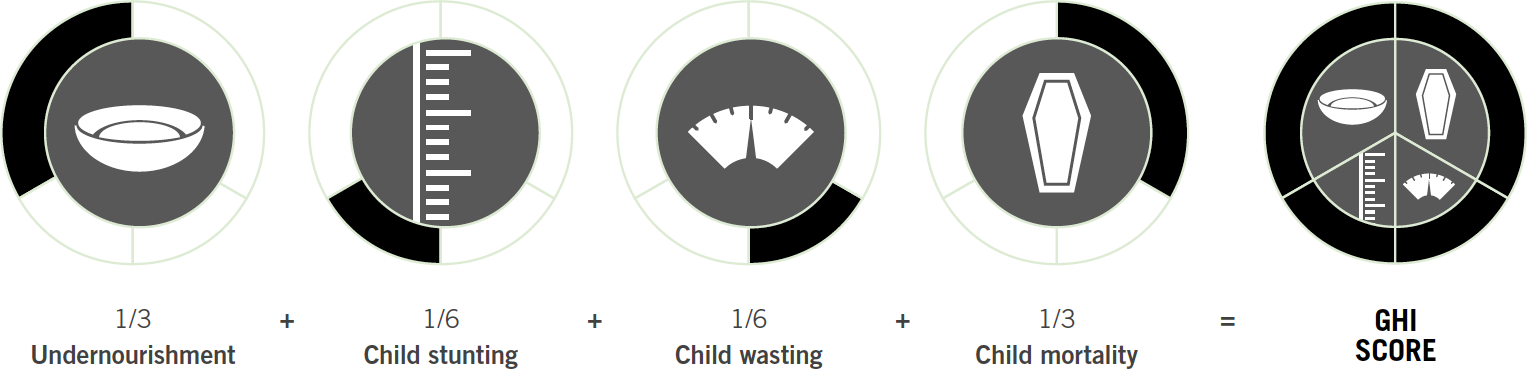
The Global Hunger Index (GHI) is a tool for comprehensively measuring and tracking hunger at global, regional, and national levels. GHI scores are based on the values of four component indicators:

Undernourishment: the share of the population with insufficient caloric intake.
Child stunting: the share of children under age five who have low height for their age, reflecting chronic undernutrition.
Child wasting: the share of children under age five who have low weight for their height, reflecting acute undernutrition.

Child mortality: the share of children who die before their fifth birthday, partly reflecting the fatal mix of inadequate nutrition and unhealthy environments.

India


≤ 9.9
low
10.0–19.9
moderate
20.0–34.9
serious
35.0–49.9
alarming
≥ 50.0
extremely alarming


In the 2024 Global Hunger Index, India ranks 105th out of the 127 countries with sufficient data to calculate 2024 GHI scores. With a score of 27.3 in the 2024 Global Hunger Index, India has a level of hunger that is serious.

India's GHI Score is based on the values of four component indicators:

  • 13.7%
    of the population is undernourished
  • 35.5%
    of children under five are stunted
  • 18.7%
    of children under five are wasted
  • 2.9%
    of children die before their fifth birthday

Note: — = Data are not available or not presented. See Table A.3 for provisional designations of the severity of hunger for some countries with incomplete data. *GHI estimates. Some countries did not exist in their present borders in the given year or reference period.


very high


high


medium


low


very low

Note: Data for GHI scores, child wasting, and child stunting are from 1998–2002 (2000), 2006–2010 (2008), 2014–2018 (2016), and 2019–2023 (2024). Data for undernourishment are from 2000–2002 (2000), 2007–2009 (2008), 2015–2017 (2016), and 2021–2023 (2024). Data for child mortality are from 2000, 2008, 2016, and 2022 (2024). See Methodology for the formula for calculating GHI scores and the sources from which the data are compiled. The boundaries and names shown and the designations used on maps on this page do not imply official endorsement or acceptance by Welthungerhilfe (WHH), Concern Worldwide or the Institute for International Law of Peace and Armed Conflict (IFHV).

Note: Afghanistan, Bangladesh, Bhutan, India, Maldives, Nepal, Pakistan, and Sri Lanka are in South Asia for the purposes of Figure 1.3, whereas the remaining countries are in East and Southeast Asia. Bhutan and Maldives are not shown, owing to insufficient data for the calculation of GHI scores. Existing data and provisional indicator values for these countries were included in the calculation of regional and global GHI scores. See Table A.3 regarding provisional designations of hunger severity for countries with incomplete data.

ABOUT THE GLOBAL HUNGER INDEX SCORES

Composition of the Global Hunger Index

The Global Hunger Index (GHI) is a tool for comprehensively measuring and tracking hunger at global, regional, and national levels. GHI scores are based on the values of four component indicators:

Undernourishment

Undernourishment: the share of the population with insufficient caloric intake.

Child Stunting

Child stunting: the share of children under age five who have low height for their age, reflecting chronic undernutrition.

Child Wasting

Child wasting: the share of children under age five who have low weight for their height, reflecting acute undernutrition.

Child Mortality

Child mortality: the share of children who die before their fifth birthday, partly reflecting the fatal mix of inadequate nutrition and unhealthy environments.

Based on the values of the four indicators, a GHI score is calculated on a 100-point scale reflecting the severity of hunger, where 0 is the best possible score (no hunger) and 100 is the worst. Each country’s GHI score is classified by severity, from low to extremely alarming.


2024 സെപ്റ്റംബർ 11, ബുധനാഴ്‌ച

KERALA HIGH COURT ON HEMA COMMITTEE REPORT

'Why Govt Was Inactive For 4 Years?' : Kerala High Court Directs State To Hand Over Unredacted Hema Committee Report To SIT Tellmy Jolly & Manju Elsa Isac 10 Sept 2024 11:50 AM The Kerala High Court today directed the State government to hand over the unredacted version of Justice Hema Committee Report, which disclosed large scale sexual harassment in the Malayalam film industry, to the Special Investigating Team (SIT) to probe offences disclosed in the Report. The report, handed over to the State back in 2019, also revealed other issues faced by women in cinema, like gender discrimination, lack of safety in the workplace, insufficient basic facilities, wage disparities etc. The DGP was given a copy of the report in February 2021. Also Read - Malayalam Cine Actor Baburaj Approaches High Court Seeking Anticipatory Bail In Rape Case Thus, the Court expressed strong displeasure over the State's inaction in the matter for 4 long years. It orally observed, “Why is the State Government inactive or silent from 31.12.2019 to now…When the state government has received a report based on an enquiry or committee set up by its own for gathering information...when the state government is apprised of a malady in society and commission of several offences, what is the bare minimum that the state government has to do? We are curious, rather, we are surprised or taken aback by the inaction on the part of the statement government. In our view, the bare minimum expected of the state government when it received the report or at least when the DGP was given a copy in 2021, we are in 2024. And the state government has done nothing…One thing is assuring confidentiality of women who may have given the statements, we understand that. You may also have to assure confidentiality with regard to so called persons who have been named in the statements having committed the offence. They do have the right to privacy and reputation but despite all this when the state government is confronted or told that practices which are derogatory to women exist in the society, what is the bare minimum that you should do?” It added, "Why do you say registration of crime is not done when several offences are narrated in the report. Prima facie offences under IPC and POCSO Act are made out. Why no action?...We understand privacy and confidentiality. You can take necessary action. Report prima facie shows many offences, not just sexual offences but about remuneration etc. You can take action and if the victim does not want to prosecute then that is alright. But why cannot an investigation be started?" Also Read - Tourist Buses Not Allowed To Pick Up And Drop Off Passengers Like A Stage Carriage: Kerala High Court The Court has now asked the SIT to submit an action taken report on the next date, whereafter it will open the sealed cover containing the unredacted version of the report and decide whether SIT's action/ inaction is justified. The matter was heard by the Special Bench of Justice A. K. Jayasankaran Nambiar and Justice C. S. Sudha, constituted to hear matters connected with the report of Justice Hema Committee, which was constituted by the Government in 2017. The report was published on August 19, 2024. The Court has also orally cautioned against media trial, adding that it is not issuing any formal gag order. It said the media will act responsibly and it should not put any pressure on the SIT to act in haste, as it might trample the investigation and affect the rights of the people involved. Further, the Court said that there should be restraint and caution from the side of the officers so that the privacy of both parties- accused and victims are protected. The Court said, "We are also hopeful that since this Court is now in seizin of this matter, and will be monitoring the progress of the investigation by the SIT, the print, electronic and social media will ensure that undue pressure is not applied on the Investigating Team through posts or news articles which may have the effect of pressurising the investigating agencies to act in a hasty manner. Since we are hopeful that the print, electronic and social media will show due respect to the rights of the individuals in the Society in a sensitive matter such as the present, we do not feel any need to pass a formal order restraining the media in this regard." The Court added that the State is not prevented from taking action on the report just because the SIT is looking into the offences. "SIT can look into criminal offences referred to in the report. But there are other issues also like labour issues, economic issues faced by women which must be looked into by the Govt. Such issues have to be dealt with by the government," it orally remarked. The Court also pointed towards the "peculiar demographics" of Kerala where the population of women is higher than men, adding that the issue is one "affecting the majority in our state.” The Court stated that the SIT will go through the Report and see whether an offence, cognizable or otherwise has been made out and proceed to take action as per law. It directed the SIT to submit an action taken report before the Government, who in turn will submit it before the Court along with their affidavit. The matter will now be heard on October 03. Case Number: WP(C) 29846/ 2024 and other matters Case Name: Navas A @ Paichira Navas v State of Kerala and other matters Kerala HC Directs State To Place Entire Justice Hema Committee Report Before It In Sealed Cover, Suo Moto Impleads Women's Commission Tell My Jolly 22 Aug 2024 12:59 PM The Kerala High Court has directed the State Government to make available the entire Justice Hema Committee Report, including the redacted portions before the Court in a sealed cover. The Court also suo moto impleaded the Kerala State Women's Commission. The Court passed the above order while considering a Public Interest Litigation seeking to initiate criminal proceedings against offenders who committed sexual crimes against women in the Malayalam film industry. The Justice Hema Committee was constituted by the Government in 2017 and was tasked to study issues faced by women in the Malayalam film industry. The report was published on August 19, 2024. Also Read - Malayalam Cine Actor Baburaj Approaches High Court Seeking Anticipatory Bail In Rape Case The Division Bench comprising Acting Chief Justice A.Muhamed Mustaque and Justice S Manu ordered thus: "If any cognizable offence is disclosed in the committee, whether a criminal action is necessary or not is to be decided by this court. The Government is as of now unable to proceed in this matter for the simple reason that no one has come forward with a complaint. But the fact remains that the report discloses sexual exploitation and harassment of women. how to protect these vulnerable women and what action can be taken against the perpetrators of the crime is something that the Court needs to address. Accordingly, we admit this writ petition and await the government's stand on this. We also implemented Kerala State Women's Commission suo moto in this matter. we also direct the government to make available the entire committee report in a sealed cover before this Court, only one copy." The Counsel for the petitioner submitted before the Court State has a responsibility to prosecute individuals who committed cognizable offences against women in the film industry based on the information disclosed in the Justice Hema Committee Report. The Counsel appearing on behalf of the State Government submitted that even the Government does not have details of witnesses or victims since the report was made confidential by the State Information Commission. It was submitted that the Justice Hema Committee was constituted to study the issues faced by women in the film industry and was taken to suggest measures, unlike a judicial commission. Also Read - Tourist Buses Not Allowed To Pick Up And Drop Off Passengers Like A Stage Carriage: Kerala High Court It was stated that parties disclosed details before the Committee based on the promise of confidentiality. It was stated that individuals with grievances could approach the Police or authorities with complaints for action to be taken. The Court noted that the Justice Hema Committee Report indicates instances of sexual harassment and exploitation against women in the Malayalam film industry and some action has to be taken in this. Also Read - Kerala HC Quashes Criminal Case Against Mathrubhumi TV Employees For Conducting Sting Operation; Says No Malafide Intention The Court noted that the issue is that parties want to maintain anonymity and they are a vulnerable section of women who do not wish to disclose about the harassment in public. The Court noted that this issue has to be addressed and actions need to be taken to protect these vulnerable women. The Court orally enquired as to what action could be taken based on the Committee's report. It also noted that the entire exercise will become futile if no action is taken based on the Report. It orally said, “But can we ignore this issue now that is the problem for all of us. In what manner can we approach this issue?” The matter is posted to September 10 for further hearing. The plea has been moved by Advocates Sekhar G Thampi, Akhil Sussendran, Abhishek Nair M R Case Number: WP(C) 29846/ 2024 Justice Hema Committee Proposes Special Law & Tribunal To "Liberate Women From Evils Of Malayalam Film Industry" Tellmy Jolly 19 Aug 2024 6:54 PM After much speculation, the Justice Hema Committee report was made public today. The Committee was constituted in 2017 by the Kerala Government to study and report on the issues faced by women working in the Malayalam film industry and to suggest solutions. The Justice Hema Committee suggested that issues faced by women in the film industry could only be resolved by the enactment of a new statute and by the constitution of an independent Tribunal to address their grievances. Also Read - Foreign Entity Having Valid Tax Residency Certificate Is Eligible To DTAA Benefit On Long-Term Capital Gain From Sale Of Share Of Indian Entity: Delhi... “We have absolutely no hesitation to state that there must be an independent forum which must be constituted by the government, as per a statute, to deal with the problems of women in cinema. Then and then alone the women can be liberated from the evils of Malayalam film industry”, stated the report. The Committee's study revealed that women in the film industry face numerous issues, including, sexual demands, sexual harassment, abuse and assault in workplace. They also face problems of transportation and accommodation. It also stated that women lack basic facilities like toilets and changing rooms in film sets, leading to human rights violations. Additionally, the report highlighted the issues of lack of safety and security for women, gender discrimination, male domination. The report further stated that women faced gross disorderly conduct from others who are under the influence of alcohol and drugs , vulgar comments, cyber harassment, payment disparity etc. The Committee emphasised that women were unaware of their rights and that there is an absence of a legally constituted authority to redress their grievances. Also Read - Payments Made During Investigation Without SCN Do Not Constitute Payments Against Demand: CESTAT No Purpose In Constituting Internal Complaints Committee The Committee suggested that the problems faced by women cannot be resolved by forming an Internal Complaints Committee (ICC) in the film industry. The recommendation for constitution of ICC was made based on the Apex Court decision in Vishaka v State of Rajasthan (1997) and Sexual Harassment of Women at Workplace (Prevention, Prohibition and Redressal) Act, 2013. However, the Committee felt that ICC could not address the problems faced by women in cinema since individuals working in cinema will only be the president and members of the ICC. It also stated that women will be scared to divulge details of harassment before the ICC if its members are from the film industry itself. The report said, “we are fully satisfied of the fact that as long as the power structure exists in the Malayalam film industry, they will take full control of it and account constitution of ICC comprising of persons in cinema will be of no use at all to protect any woman in Malayalam film industry from sexual harassment/assault/abuse in cinema.” Kerala Cine Employers and Employees (Regulation ) Act 2020 The report suggested that the existing statutes such as the Cinematograph Act, Cinemas (Regulation) Act (Kerala), Cine Workers and Cinema Theatre Workers (Regulation), Cine Workers Welfare Cess Act and Cine Workers Welfare Fund Act were insufficient to deal with the challenges faced by women in present times. It also stated that the problems faced by women in cinema cannot be adequately dealt with under the provisions of the IPC and POSH Act. The Committee thus suggested that enacting a separate Act can only address the specific issues women face in the film industry. It proposed enacting the Kerala Cine Employers and Employees (Regulation) Act and establishing a Tribunal under this statute. The Report suggested that a District Retired Judge must head the Tribunal and a revision against the Tribunal's order could be preferred before the High Court. It suggested that proceedings before the Tribunal must be confidential and will be held in camera. Further, the report stated that the statute must also lay down illegal acts prohibited under the statute and provide penalties. Other Suggestions The report concludes by giving other suggestions to redress the issues faced by women in cinema. Having a written contract stipulating terms and conditions of services and remuneration would resolve many difficulties. Mandatory, basic online training in gender awareness to prevent exploitation against women and to ensure respect and dignity for all. Alcohol and drugs must be banned from workplaces in cinemas. The huge gap in remuneration based on gender must be reduced and minimum remuneration must be fixed for junior artists. Ensure proper accommodation for women. Mandatory background checks for staff. Ensure that a police complaint is filed if any criminal offence is committed. Enact a comprehensive film policy focussing on gender equality. Film studies could be introduced as an optional course in government colleges in every district and women who pursue such courses could be offered fee concessions, scholarships etc. A digital platform for girl technicians must be formed in all colleges where they could share ideas and support each other. The report further suggested creation of a welfare fund for women who have to stay away from their jobs due to delivery or physical disability. Further, it was suggested that film scenes must not glorify gender injustice or violence against women. Background The Justice Hema Committee Report was submitted before the Chief Minister in 2019 and the decision to make the report public was taken on July 5, 2024. Initially, a stay was granted by the Kerala High Court against the publication of the report in a writ petition filed by film producer Sajimon Parayil. However, the single bench dismissed the writ petition and ordered that the report could be made public. A writ appeal was preferred against the order of the single judge by film actress, Renjini, despite not being a party in the writ petition. Her writ appeal was dismissed today by the High Court and she was granted liberty to file a fresh writ petition. DR. A.K.JAYASANKARAN NAMBIAR, J. & C.S. SUDHA, J. ------------------------------- W.P.(C).NOS.29846, 31639, 31205 & 31332 OF 2024 & W.A.NO.1248 OF 2024 ----------------------------------- Dated this the 10th day of September, 2024 O R D E R Dr. A.K. Jayasankaran Nambiar, J. All these matters were posted before us today. At the outset, the learned Advocate General informed us that the full text of the Justice Hema Committee Report was available with him for handing over in a sealed cover as directed in the order dated 22.08.2024 of this Court. However, we requested the Advocate General to keep the sealed cover in safe custody in his office till we require the same for perusal at a later stage. We then took note of the submission of the learned Advocate General that a Special Investigation Team [SIT] had been constituted by the Director General of Police cum State Police Chief vide order dated 25.08.2024 in the wake of complaints that were received by the Police Department on issues related to the Justice Hema Committee Report. The SIT constituted comprises of the following persons: 1. Sri. Sparjankumar IPS, IG & Commissioner of Police, Tvpm City. 2. Smt. Ajeetha Begum IPS – DIG, Tvpm Range 3. Smt. Poonkuzhali IPS – AIG, Coastal Security. 4. Smt. Aishwarya Dongre IPS – Asst. Director, KEPA W.P.(C).No.29846, 31639, 31205 & 31332/24 & :: 2 :: W.A.NO.1248/24 5. Smt. Merin Joseph IPS – Supdt. of Police (HQ), Crime Branch. 6. Sri. Ajith V. IPS – AIG to ADGP (L&O). 7. Sri. Madhusoodhanan IPS – SP, Crime Branch, Tvpm. and is to be supervised by Sri. H. Venkatesh IPS, Addl. Director General of Police, Crime Branch. 2. It is also seen that Sri. Sparjankumar IPS, IG & Commissioner of Police, Thiruvananthapuram City will head the SIT and Sri. Madhusoodhanan IPS, SP, Crime Branch, Thiruvananthapuram is designated as the Investigation Officer [IO]. 3. Finding, however, that the constitution of the SIT aforementioned was only for the purposes of investigating into the complaints received in the recent past, after the publication of the Justice Hema Committee Report in its redacted form, we enquired with the learned Advocate General as to what action the State had taken pursuant to the receipt of the report from the Justice Hema Committee as early as on 31.12.2019. The learned Advocate General then submitted that other than entrusting a copy of the report to the Director General of Police in February, 2021, no further action was taken by the State Government. We are also informed that even the Director General of Police, to whom the report was handed over, did not take any further action on the report till the constitution of the SIT vide order dated 25.08.2024. W.P.(C).No.29846, 31639, 31205 & 31332/24 & :: 3 :: W.A.NO.1248/24 4. We must observe that we are rather perplexed by the inaction of the State Government. In a State where the population of the female has always exceeded that of the male, and the birth population ratio of females has always been higher than the national average, the interests of women cannot be treated as a minority interest, or their rights equated to minority rights. As per a study conducted by the State Government itself in 2013, the literacy rate among females in our state has always been very high, at above 91%, and it is only marginally below the male literacy rate that stands at around 96%. The life expectancy for women in our State is in the region of 76.30 as against 71.40 for men. Therefore, the State has to see the problems faced by women as problems affecting a majority of the literate people in the State. 5. In the instant case, the conduct of the State Executive has been alarmingly lethargic. Although the report of the Justice Hema Committee was submitted to the State Government as early as on 31.12.2019, there was no action taken thereon for well over four years, and even thereafter, it took a litigation to spur the State into action, and that too only in respect of one of the many issues that were flagged by the Justice Hema Committee. While it may be a fact that the Committee was only in the nature of a fact-finding body for the State Government, when we consider the public money spent for the W.P.(C).No.29846, 31639, 31205 & 31332/24 & :: 4 :: W.A.NO.1248/24 effective functioning of the committee, and the high profile nature of the Committee itself, headed as it was by a retired Judge of the High Court, we are of the view that the bare minimum that was expected of the Government was to take a prompt decision as whether or not it agreed with the findings of the Committee. Apparently, this was not done. 6. Silence and inaction not being options available to the State Government any more, we are of the definitive view that the State government must take immediate steps to address the various issues generally faced by women in our society, including those faced by women in connection with their respective vocations. While the Directive Principles of State Policy enumerated under Part-IV of the Constitution, especially Articles 38, 39 (a), (d), (e) & (f), 42, 43 & 46 that are relevant in the present context, make it obligatory on the State to apply the said principles in making laws, Article 51-A (e) of the Constitution makes it the duty of every citizen, inter alia, to renounce practices derogatory to the dignity of women. The State will do well to remind itself that the collective duties of the citizens in society translates into a duty of the State and hence it cannot afford to remain a mute spectator to the social and economic injustice that is meted out to women in general, who constitute a significant section of its citizenry. W.P.(C).No.29846, 31639, 31205 & 31332/24 & :: 5 :: W.A.NO.1248/24 7. Taking note of the present situation, therefore, we issue the following directions: (i) The State Government shall, forthwith, furnish a full copy of the Justice Hema Committee Report, together with all its annexures - documentary and otherwise - to the SIT constituted in terms of the order dated 25.08.2024. The SIT shall, on its part, go through the report in its entirety to see whether any offence, cognizable or otherwise, has been made out at the instance of any person and proceed to take suitable action in accordance with law by treating the contents of the report as “information” for the purposes of setting the law in motion. (ii) The SIT shall, in particular, be mindful of the sensitivities that are required to be observed during investigation, and shall take note of the legal provisions regarding the privacy rights of the victim as well as those against whom allegations/accusations have been levelled by the alleged victims of crimes. The preliminary enquiry and consequent action shall be done in a manner that is fair to all concerned. The SIT shall then forward a report, on the action taken by it, to the State Government within two weeks from today and upon receipt thereof, the State Government shall include a copy of the action taken report along with the counter affidavit filed to the averments in the various writ petitions and writ appeal referred above. W.P.(C).No.29846, 31639, 31205 & 31332/24 & :: 6 :: W.A.NO.1248/24 (iii) The members of the SIT shall refrain from giving press conferences or communicating with the media on any aspect of the investigation conducted in connection with the report of the Justice Hema Committee. We make it clear however that the restriction against giving press conferences shall not be seen as preventing the investigating team from giving such information, without mentioning the names of any person, as would indicate the progress that they have made in their investigation. (iv) This Court believes that the print, electronic and social media would exercise restraint and adhere to an appropriate code of conduct in the matter of publishing news governing any aspect of the Justice Hema Committee Report by according due respect to the privacy rights of persons who are allegedly victims of offences committed against them, as also of persons against whom such allegations/accusations have been made. They shall bear in mind that even an accused person has a fundamental right to a fair investigation and trial of the case against him/her and a trial by media would throw to the winds the guarantee of fundamental rights assured to the individual under our Constitution. The safeguard of the fundamental right to privacy under our Constitution is assured to the individual not only by the State but also at the instance of fellow citizens who are obligated under Part IV-A of our Constitution to abide by the Constitution and respect its ideals as also to promote harmony and the W.P.(C).No.29846, 31639, 31205 & 31332/24 & :: 7 :: W.A.NO.1248/24 spirit of common brotherhood amongst all the people of India transcending religious, linguistic and regional or sectional diversities and to renounce practices derogatory to the dignity of women. (v) We are also hopeful that since this Court is now in seizin of this matter, and will be monitoring the progress of the investigation by the SIT, the print, electronic and social media will ensure that undue pressure is not applied on the Investigating Team through posts or news articles which may have the effect of pressurising the investigating agencies to act in a hasty manner. (vi) Since we are hopeful that the print, electronic and social media will show due respect to the rights of the individuals in the Society in a sensitive matter such as the present, we do not feel any need to pass a formal order restraining the media in this regard. Post on 03.10.2024. Sd/- DR. A.K.JAYASANKARAN NAMBIAR JUDGE Sd/- C.S. SUDHA JUDGE prp/10/9/24

'Why Govt Was Inactive For 4 Years?' : Kerala High Court Directs State To Hand Over Unredacted Hema Committee Report To SIT Tellmy Jolly & Manju Elsa Isac 10 Sept 2024 11:50 AM

DR. A.K.JAYASANKARAN NAMBIAR, J. & C.S. SUDHA, J. ------------------------------- W.P.(C).NOS.29846, 31639, 31205 & 31332 OF 2024 & W.A.NO.1248 OF 2024 ----------------------------------- Dated this the 10th day of September, 2024 O R D E R Dr. A.K. Jayasankaran Nambiar, J. All these matters were posted before us today. At the outset, the learned Advocate General informed us that the full text of the Justice Hema Committee Report was available with him for handing over in a sealed cover as directed in the order dated 22.08.2024 of this Court. However, we requested the Advocate General to keep the sealed cover in safe custody in his office till we require the same for perusal at a later stage. We then took note of the submission of the learned Advocate General that a Special Investigation Team [SIT] had been constituted by the Director General of Police cum State Police Chief vide order dated 25.08.2024 in the wake of complaints that were received by the Police Department on issues related to the Justice Hema Committee Report. The SIT constituted comprises of the following persons: 1. Sri. Sparjankumar IPS, IG & Commissioner of Police, Tvpm City. 2. Smt. Ajeetha Begum IPS – DIG, Tvpm Range 3. Smt. Poonkuzhali IPS – AIG, Coastal Security. 4. Smt. Aishwarya Dongre IPS – Asst. Director, KEPA W.P.(C).No.29846, 31639, 31205 & 31332/24 & :: 2 :: W.A.NO.1248/24 5. Smt. Merin Joseph IPS – Supdt. of Police (HQ), Crime Branch. 6. Sri. Ajith V. IPS – AIG to ADGP (L&O). 7. Sri. Madhusoodhanan IPS – SP, Crime Branch, Tvpm. and is to be supervised by Sri. H. Venkatesh IPS, Addl. Director General of Police, Crime Branch. 2. It is also seen that Sri. Sparjankumar IPS, IG & Commissioner of Police, Thiruvananthapuram City will head the SIT and Sri. Madhusoodhanan IPS, SP, Crime Branch, Thiruvananthapuram is designated as the Investigation Officer [IO]. 3. Finding, however, that the constitution of the SIT aforementioned was only for the purposes of investigating into the complaints received in the recent past, after the publication of the Justice Hema Committee Report in its redacted form, we enquired with the learned Advocate General as to what action the State had taken pursuant to the receipt of the report from the Justice Hema Committee as early as on 31.12.2019. The learned Advocate General then submitted that other than entrusting a copy of the report to the Director General of Police in February, 2021, no further action was taken by the State Government. We are also informed that even the Director General of Police, to whom the report was handed over, did not take any further action on the report till the constitution of the SIT vide order dated 25.08.2024. W.P.(C).No.29846, 31639, 31205 & 31332/24 & :: 3 :: W.A.NO.1248/24 4. We must observe that we are rather perplexed by the inaction of the State Government. In a State where the population of the female has always exceeded that of the male, and the birth population ratio of females has always been higher than the national average, the interests of women cannot be treated as a minority interest, or their rights equated to minority rights. As per a study conducted by the State Government itself in 2013, the literacy rate among females in our state has always been very high, at above 91%, and it is only marginally below the male literacy rate that stands at around 96%. The life expectancy for women in our State is in the region of 76.30 as against 71.40 for men. Therefore, the State has necessarily to see the problems faced by women as problems affecting a majority of the literate people in the State. 5. In the instant case, the conduct of the State Executive has been alarmingly lethargic. Although the report of the Justice Hema Committee was submitted to the State Government as early as on 31.12.2019, there was no action taken there on for well over four years, and even thereafter, it took a litigation to spur the State into action, and that too only in respect of one of the many issues that were flagged by the Justice Hema Committee. While it may be a fact that the Committee was only in the nature of a fact-finding body for the State Government, when we consider the public money spent for the W.P.(C).No.29846, 31639, 31205 & 31332/24 & :: 4 :: W.A.NO.1248/24 effective functioning of the committee, and the high profile nature of the Committee itself, headed as it was by a retired Judge of the High Court, we are of the view that the bare minimum that was expected of the Government was to take a prompt decision as whether or not it agreed with the findings of the Committee. Apparently, this was not done. 6. Silence and inaction not being options available to the State Government any more, we are of the definitive view that the State government must take immediate steps to address the various issues generally faced by women in our society, including those faced by women in connection with their respective vocations. While the Directive Principles of State Policy enumerated under Part-IV of the Constitution, especially Articles 38, 39 (a), (d), (e) & (f), 42, 43 & 46 that are relevant in the present context, make it obligatory on the State to apply the said principles in making laws, Article 51-A (e) of the Constitution makes it the duty of every citizen, inter alia, to renounce practices derogatory to the dignity of women. The State will do well to remind itself that the collective duties of the citizens in society translates into a duty of the State and hence it cannot afford to remain a mute spectator to the social and economic injustice that is meted out to women in general, who constitute a significant section of its citizenry. W.P.(C).No.29846, 31639, 31205 & 31332/24 & :: 5 :: W.A.NO.1248/24 7. Taking note of the present situation, therefore, we issue the following directions: (i) The State Government shall, forthwith, furnish a full copy of the Justice Hema Committee Report, together with all its annexures - documentary and otherwise - to the SIT constituted in terms of the order dated 25.08.2024. The SIT shall, on its part, go through the report in its entirety to see whether any offence, cognizable or otherwise, has been made out at the instance of any person and proceed to take suitable action in accordance with law by treating the contents of the report as “information” for the purposes of setting the law in motion. (ii) The SIT shall, in particular, be mindful of the sensitivities that are required to be observed during investigation, and shall take note of the legal provisions regarding the privacy rights of the victim as well as those against whom allegations/accusations have been levelled by the alleged victims of crimes. The preliminary enquiry and consequent action shall be done in a manner that is fair to all concerned. The SIT shall then forward a report, on the action taken by it, to the State Government within two weeks from today and upon receipt thereof, the State Government shall include a copy of the action taken report along with the counter affidavit filed to the averments in the various writ petitions and writ appeal referred above. W.P.(C).No.29846, 31639, 31205 & 31332/24 & :: 6 :: W.A.NO.1248/24 (iii) The members of the SIT shall refrain from giving press conferences or communicating with the media on any aspect of the investigation conducted in connection with the report of the Justice Hema Committee. We make it clear however that the restriction against giving press conferences shall not be seen as preventing the investigating team from giving such information, without mentioning the names of any person, as would indicate the progress that they have made in their investigation. (iv) This Court believes that the print, electronic and social media would exercise restraint and adhere to an appropriate code of conduct in the matter of publishing news governing any aspect of the Justice Hema Committee Report by according due respect to the privacy rights of persons who are allegedly victims of offences committed against them, as also of persons against whom such allegations/accusations have been made. They shall bear in mind that even an accused person has a fundamental right to a fair investigation and trial of the case against him/her and a trial by media would throw to the winds the guarantee of fundamental rights assured to the individual under our Constitution. The safeguard of the fundamental right to privacy under our Constitution is assured to the individual not only by the State but also at the instance of fellow citizens who are obligated under Part IV-A of our Constitution to abide by the Constitution and respect its ideals as also to promote harmony and the W.P.(C).No.29846, 31639, 31205 & 31332/24 & :: 7 :: W.A.NO.1248/24 spirit of common brotherhood amongst all the people of India transcending religious, linguistic and regional or sectional diversities and to renounce practices derogatory to the dignity of women. (v) We are also hopeful that since this Court is now in seizin of this matter, and will be monitoring the progress of the investigation by the SIT, the print, electronic and social media will ensure that undue pressure is not applied on the Investigating Team through posts or news articles which may have the effect of pressurizing the investigating agencies to act in a hasty manner. (vi) Since we are hopeful that the print, electronic and social media will show due respect to the rights of the individuals in the Society in a sensitive matter such as the present, we do not feel any need to pass a formal order restraining the media in this regard. Post on 03.10.2024. Sd/- DR. A.K.JAYASANKARAN NAMBIAR JUDGE Sd/- C.S. SUDHA JUDGE prp/10/9/24

2024 സെപ്റ്റംബർ 9, തിങ്കളാഴ്‌ച

പൊതു സിവിൽ നിയമമല്ല പരിഹാരം വ്യക്തിനിയമ പരിഷ്ക്കരണമാണ്

ഇന്ത്യയിലെ മുസ്ലിം സ്ത്രീകൾ മറ്റു സ്ത്രീകൾക്ക് ലഭിക്കാത്ത ചില ആനുകൂല്യങ്ങൾ മുസ്ലിം വ്യക്തി നിയമം / പൊതു നിയമം  വഴി അനുഭവിക്കുന്നുണ്ട്.

1)ഭർത്താവിൽ നിന്നും ചെലവിനു ലഭിക്കാനുള്ള അവകാശം. 
 ഇതു രണ്ടു തരത്തിൽ ഉണ്ട്.
a)ഒന്നു മുസ്ലിം സ്ത്രീ ആയതു കൊണ്ടു ശരിയത്ത് പ്രകാരം സ്വന്തം വരുമാനം ഉണ്ടെങ്കിലും അവർക്കു ഭർത്താവ് ചെലവിനു കൊടുക്കുവാൻ ബാധ്യസ്ഥനാണ്. ( അനുസരണ ഇല്ലാത്ത ഭാര്യ ഈ അവകാശത്തിനു അർഹരല്ല. അനുസരണ എന്താണെന്നത് തർക്ക വിഷയമാണ്, ആധുനിക സമൂഹത്തിൽ "അനുസരണ " എന്ന വാക്ക് എത്രമേൽ അപക്വമാണെന്നു നിയമ വ്യാഖ്യാതക്കൾ പറയട്ടെ ).
N)സ്വന്തമായി വരുമാനമില്ലാത്ത ഭാര്യയ്ക്കു BNSS 144 പ്രകാരം ചെലവിനു ലഭിക്കുവാൻ അവകാശം ഉണ്ട്.  

വിവാഹ മോചിത :

സ്വന്തമായി വരുമാനം ഉള്ളവരും ഇല്ലാത്തവരുമായ മുസ്ലിം സ്ത്രീക്ക്  വിവാഹ മോചിതയായാൽ 1986 ലെ വിവാഹം മോചിത സംരക്ഷണ നിയമ പ്രകാരം മഹറ് , ഇദ്ദ കാലയളവിലെ ചെലവ്, വിവാഹത്തോട് അനുബന്ധിച്ചും അതിനു ശേഷവും ലഭിച്ച സമ്മാനങ്ങൾ, ഭാവി സംരക്ഷണ ചെലവ്  എന്നിവയ്ക്കും അവകാശം ഉണ്ട്.
( ഇതു മുസ്ലിം സ്ത്രീക്കു മാത്രം ലഭിക്കുന്ന അവകാശങ്ങൾ ആണ് . ) വിവാഹ മോചന സമയത്ത് രണ്ട് വയസ്സിൽ താഴെ പ്രായമുള്ള കുട്ടി ഉണ്ടെങ്കിൽ ആ കുട്ടിക്കായി പ്രത്യേക ചെല് ലഭിക്കാനും അവകാശം ഉണ്ട്.

2. വിവാഹ  മോചനം .
എല്ലാ കാലത്തും വിവാദമായ കാര്യമാണ് ഇസ്ലാമിക ശരീയത്ത് പുരുഷനു ഏക പക്ഷീയമായി  അനുവദിച്ചു നൽകിയ തലാഖ് ( വിവാഹ മോചന ) അധികാരം . എന്നാൽ നമ്മുടെ കോടതികൾ ഖുറാനും പ്രവാചകചര്യകളും വ്യാഖ്യാനിച്ചു തന്നെ ഏക പക്ഷീയ തലാഖുകൾക്കു വിലങ്ങുകൾ ഇട്ടിട്ടുണ്ട് ( ഷമീം അറ കേസ് ) എന്നാൽ തലാഖിനു സമാനമായ അധികാരം എക്സ്ട്രാ ജുഡീഷ്യൽ അധികാരം ഖുൽ അ ( കുല ) സ്ത്രീകൾക്കു ഉണ്ടെന്നു കേരള ഹൈക്കോടതി വിധി ന്യായം വഴി പ്രഖാപിച്ചത് വലിയ തോതിൽ കേരളത്തിലും തമിഴ് നാട്ടിലും സ്ത്രീകൾ ഉപയോഗിക്കുന്നുണ്ട് . മറ്റു മതാചാര പ്രകാരം വിവാഹം കഴിച്ചവരും SMA പ്രകാരം വിവാഹം കഴിച്ചവരും വിവാഹ മോചനം ലഭിക്കുന്നതിനു വേണ്ടി വർഷങ്ങളോളം കോടതിയിൽ കയറി ഇറങ്ങേണ്ടി വരുമ്പോൾ വളരെ പെടുന്നനേ ഈ കാര്യം സാധിക്കുവാൻ ശരീഅത്തു പ്രകാരം മുസ്ലിം സ്ത്രീക്കു സാധിക്കുന്നുണ്ട്. (പുരുഷനും . സാധിക്കുന്നുണ്ട്.)

ചില മത   വ്യാഖ്യാതാക്കൾ പ്രചരിപ്പിക്കുന്നതു പോലെ മുസ്ലിം ഭർത്താവിനു  ഇന്ത്യയിലെ മുസ്ലിം സ്ത്രീയെ അടിക്കുവാനോ മാനസിക സമ്മർദ്ദത്തിൽ ആക്കുവാനോ  നമ്മുടെ സെക്യുലർ നിയമം ( ഗാർഹിക പീഢന നിരോധന നിയമം , BNS 85)  അനുവദിക്കുന്നുമില്ല.

3. ദത്ത് ഇസ്ലാം വിലക്കുന്നുണ്ടെങ്കിലും  ബാലനീതി  നിയമ പ്രകാരം ഇന്ത്യയിലെ മുസ്ലീമിങ്ങൾക്ക് ആ അവകാശം സുപ്രിം കോടതി ശബ്നം ഹാഷ്മി കേസിൽ അനുവദിച്ചിട്ടുണ്ട്. 
ഇങ്ങിനെയൊക്കെ ആണെങ്കിലും ഇന്ത്യയിൽ നിലവിലുള്ള മുസ്ലിം വ്യക്തി നിയമത്തിൽ 
 a) (മുസ്ലിം പുരുഷനുള്ള ) ബഹു ഭാര്യത്വ അവകാശവും
 b) അനന്തര അവകാശത്തിലെ സ്ത്രീക്കു പകുതി അവകാശവും നമ്മുടെ  ഭരണ ഘടനയിലെ ആർട്ടിക്ക്ൾ 14 , 15, 21 എന്നിവയുടെ കടുത്ത ലംഘനമാണ്. 

മുസ്ലിംപുരുഷന്റെ ബഹുഭാര്യത്വ അവകാശം സ്ത്രീകൾക്ക്  ഭരണഘടന ഉറപ്പു നൽകുന്ന അഭിമാനകരമായ ജീവിതത്തിനു നേരെയുള്ള വെല്ലു വിളിയാണ്.  അതു ശാശ്വതമായി പരിഹരിക്കപ്പെടണം.

എല്ലാ അർത്ഥത്തിലും തുല്യരായ മനുഷ്യർ അനന്തര സ്വത്ത് ഓഹരിയിൽ മാത്രം രണ്ടാം തരക്കാരാകുന്നതും പെൺ കുട്ടികൾ മാത്രമായതു കൊണ്ട് വിവേചനം നേരിടേണ്ടി വരുന്നതും സ്വാതന്ത്ര്യം കിട്ടി 78 വർഷം കഴിഞ്ഞിട്ടും അനുഭവിക്കേണ്ടി വരുന്നതു അത്യന്തം പരിതാപകരമാണ്. 

തിരുത്തണം , തിരുത്തിക്കണം, കാലാനുസൃതമായി നിയമങ്ങൾ.

ഈ ആവശ്യങ്ങൾ ഉന്നയിച്ച് കൊണ്ട് ,
ഒക്ടോബർ 5 ന്
എറണാകുളത്ത് സമത്വ സമ്മേളനം നടക്കുകയാണ്.
# മുസ്ലിം പുരുഷന്റെ ബഹു ഭാര്യത്വ അവകാശം നിയമം വഴി തടയുക
# മുസ്ലിം സ്ത്രീക്കു അനന്തരവകാശത്തിൽ തുല്യത നിയമം വഴി ഉറപ്പു വരുത്തുക 

ഈ രണ്ടു കാര്യങ്ങൾ ഉന്നയിച്ചാണ് തുല്യതാ സമ്മേളനം നടത്തുന്നത്.
ഫോറം ഫോർ ജെന്റർ ഇക്വാലിറ്റി എമംഗ് മുസ്ലീംസ്  FORGEM 
എന്ന സംഘടനയാണ് സമ്മേളനം സംഘടിപ്പിക്കുന്നത്.

ഈ മൂവ്മെന്റിനു പിന്തുണ വേണം.
രാജ്യത്തെ പ്രമുഖ ന്യായാധിപർ , അഭിഭാഷകർ , സിനിമ , സാംസ്കാരിക , മത, കലാ, സാഹിത്യ രംഗത്തെ പ്രമുഖർ സംബന്ധിക്കും.
വരണം ,
ഈ മനുഷ്യ കൂട്ടായ്മയിൽ  കണ്ണി ചേരണം.

#തുല്യതാസമ്മേളനം2024

©Shukkur Vakkeel

2024 ഓഗസ്റ്റ് 24, ശനിയാഴ്‌ച

Assured pensions return as government backtracks on New Pension Scheme

NEW DELHI

Centre unveils Unified Pension Scheme, which is almost akin to the Old Pension Scheme; it assures government employees of 50% of their last-drawn pay as a lifelong monthly benefit

The NDA government on Saturday (August 24, 2024) reversed a 21-year-old reform of India’s civil services pension system boldly brought in by the Atal Bihari Vajpayee government, unveiling what it called a new ‘Unified Pension Scheme’ (UPS) that is virtually akin to the Old Pension Scheme, and assures government employees 50% of their last drawn pay as a lifelong monthly benefit

The UPS, approved by the Union Cabinet on Saturday (August 24, 2024), also assures officials a periodic dearness relief hike in line with inflation trends, a family pension equivalent to 60% of a government worker’s pension in the case of their demise, and a lumpsum superannuation payout in addition to gratuity benefits at the time of retirement. Besides, a minimum pension of ₹10,000 a month has been promised for those who complete at least 10 years of central government service.

The Cabinet decision was informed by recommendations of a committee under former Finance Secretary and Cabinet Secretary-designate T.V. Somanathan, set up in March 2023 to review the National Pension System (NPS) [originally known as the New Pension Scheme] for government employees in a way that balances “their aspirations with fiscal prudence

The Hindu Explains | Why is the government tweaking the National Pension System? 

At the time, five Opposition-ruled States had moved their employees out of the NPS to the Old Pension Scheme (OPS) with guaranteed pension at 50% of salary. Under the NPS, which kicked in for employees joining government service on or after January 1, 2004, pension payouts were linked to the accumulated value of contributions made by government and the employee through the latter’s working life. These contributions were invested in equities and other market-linked securities by fund managers regulated by the Pension Fund Regulatory and Development Authority (PFRDA).

State governments are open to adopt the architecture of the UPS, cleared by the Cabinet to kick in from April 1, 2025, Mr. Somanathan said after the Cabinet’s clearance, stressing that the key difference between the OPS and the UPS is that OPS liabilities were unfunded and entailed no contributions from employees or the employer

The UPS, will be a contributory scheme, with employees’ chipping in 10% of salary and the government bringing in 18.5% of salary. Mr. Somanathan also signalled that employees’ contributions will be frozen at the 10% threshold, while the government’s contributions may be adjusted higher or lower based on periodic actuarial assessments about the funding requirements to meet the UPS promises.


While the NPS will continue to remain an option, all employees who have joined service since 2004, including those who may have retired since then, have been given the option to switch over to the more generous UPS, and Mr. Somanathan reckoned it will be beneficial for about 99% of NPS members to move to the UPS. Separately, employees have also been promised a lumpsum payment in addition to gratuity benefits at the time of retirement. This lumpsum will be equivalent to 1/10th of monthly emoluments (pay + Dearness Allowance) for every completed six months of service.


We are proud of the hard work of all government employees who contribute significantly to national progress. The Unified Pension Scheme ensures dignity and financial security for government employees, aligning with our commitment to their well-being and a secure future,” Prime Minister Narendra Modi emphasised in a post on X.

While Mr. Modi had met government employee representatives earlier in the day, their reaction to the Cabinet move was mixed.


The Central Secretariat Service Forum was pleased that the Government has realised “a genuine need to ponder over NPS” and said the UPS is better with an assured pension. However, the forum resolved to continue asking for its “one and only demand”, the OPS, indicating they were not in favour of salary deductions in the UPS.

Shiv Gopal Mishra, secretary of the Joint Consultative Mechanism (JCM) between the central government and its employees, told The Hindu that they welcomed the UPS, adding that the Prime Minister had assured better coordination with employees in their hour-long meeting in the evening. .

His JCM colleague, All India Defence Employees Federation general secretary C Srikumar differed. “This is a result of our agitations. But we are not happy. The UPS should be non-contributory,” he said, adding that they will await the actual notification before assessing the full impact.

Information and Broadcasting Minister Ashwini Vaishnaw pointed out that Congress-ruled States that had announced a return to the OPS were yet to implement it, while the PM had ensured a well-consulted outcome that will ensure “inter-generational equity”.


https://www.thehindu.com/news/national/rip-new-pension-scheme-born-january-1-2004-extinguished-august-24-2024/article68563482.ece

ഏകീകൃത പെൻഷൻ പദ്ധതിയുമായി കേന്ദ്രം

പഴയ പെൻഷൻ പദ്ധതി പുനഃസ്ഥാപിക്കണമെന്ന്‌ ആവശ്യപ്പെട്ട് രാജ്യത്ത് പ്രതിഷേധം ശക്തമായതിന്‌ പിന്നാലെ പുതിയ ഏകീകൃത പെൻഷൻ പദ്ധതിക്ക്‌ (യുപിഎസ്‌) കേന്ദ്രമന്ത്രിസഭാ യോഗം അംഗീകാരം നല്‍കി.  2025 ഏപ്രിൽ ഒന്ന്‌ മുതൽ നിലവിൽ വരും. കേന്ദ്രജീവനക്കാർക്ക്‌ നിലവിലുള്ള ദേശീയ പെൻഷൻ പദ്ധതി (എൻപിഎസ്‌) അല്ലെങ്കിൽ യുപിഎസ്‌  തിരഞ്ഞെടുക്കാം. എൻപിഎസ്‌ അംഗങ്ങൾക്ക്‌ യുപിഎസിലേക്ക്‌ മാറാം. എൻപിഎസ്‌ നിലവിലുള്ള സംസ്ഥാനങ്ങൾക്കും ആവശ്യമെങ്കിൽ യുപിഎസിലേക്ക്‌ മാറാം. പദ്ധതി 23 ലക്ഷം കേന്ദ്രജീവനക്കാർക്ക്‌ ഗുണം ചെയ്യുമെന്ന് കേന്ദ്രമന്ത്രി അശ്വിനി വൈഷ്‌ണവ്‌ പറഞ്ഞു.

● 25 വർഷമെങ്കിലും സർവീസുള്ള ജീവനക്കാർ വിരമിക്കുമ്പോൾ അവസാന 12 മാസത്തെ ശരാശരി അടിസ്ഥാന ശമ്പളത്തിന്റെ 50 ശതമാനം പെൻഷൻ നൽകും. 10 വർഷത്തിന്‌ മുകളിൽ സർവീസുള്ളവർക്ക്‌ ആനുപാതികമായ തോതിൽ പെൻഷൻ.
●  ജീവനക്കാർ മരിച്ചാൽ പെൻഷന്റെ 60 ശതമാനം കുടുംബ പെൻഷൻ.
● മിനിമം 10 വർഷം സർവീസുള്ളവർക്ക്‌ ചുരുങ്ങിയത്‌ 10,000 രൂപ പെൻഷൻ.
● ഉപഭോക്‌തൃ വില സൂചിക അടിസ്ഥാനമാക്കിയുള്ള ക്ഷാമബത്ത വ്യവസായ തൊഴിലാളികൾക്കും ലഭ്യമാക്കും.
● ജീവനക്കാർ വിരമിക്കുന്ന ഘട്ടത്തിൽ ഗ്രാറ്റുവിറ്റിക്ക്‌ പുറമേ നിശ്‌ചിതതുക കൂടി ലഭിക്കും. പൂർത്തിയാക്കിയ ഒരോ ആറുമാസ സേവനകാലയളവിനും, അവസാനം വാങ്ങിയ ശമ്പളത്തിന്റെ പത്തിൽ ഒന്നെന്ന തോതിലാകും ഈ നിശ്ചിതതുക നിർണയിക്കുന്നത്‌

അതേസമയം, പുതിയ പെൻഷൻ പദ്ധതി പ്രകാരം സർക്കാർ വിഹിതം 14 ശതമാനമായിരുന്നത്‌ യുപിഎസിൽ 18 ശതമാനമാക്കി വർധിപ്പിക്കുമെന്നും റിപ്പോർട്ടുണ്ട്‌. ജീവനക്കാരില്‍ നിന്ന് പത്തു ശതമാനം പെന്‍ഷന്‍ വിഹിതം പിടിക്കുന്നത് തുടരും.
രണ്ടാം യുപിഎ സർക്കാരിന്റെ കാലത്ത്‌ 2004 ജനുവരി മുതലാണ്‌ രാജ്യത്തെ ലക്ഷകണക്കിന്‌ കേന്ദ്ര, സംസ്ഥാന ജീവനക്കാരെ ദുരിതത്തിലാക്കി പുതിയ പെൻഷൻ പദ്ധതി നടപ്പാക്കിയത്‌.  എന്നാൽ പഴയ പെൻഷൻ പദ്ധതി നടപ്പാക്കുകയാണ്‌ വേണ്ടതെന്ന്‌ സംഘടനകൾ ആവശ്യപ്പെട്ടു.
 

Read more: https://www.deshabhimani.com/news/kerala/center-with-unified-pension-scheme/1133744

2024 ഓഗസ്റ്റ് 18, ഞായറാഴ്‌ച

Adverse Effects Of Climate Change Need Serious Consideration Justice BR Gavai-266983

Justice BR Gavai, while referring to the recent instances of natural calamities in Wayanad and Himachal Pradesh, highlighted the need to take the climate crisis seriously.

The Supreme Court Judge was delivering the inaugural address at the Commonwealth Legal Education Association's International Conference on "Law and Technology: Sustainable Transport, Tourism and Technological Innovations" in Kumarakom, Kerala.

“The adverse effects of climate change are to be looked into seriously,” he said.

He emphasized the need to ensure that the nation's development doesn't occur at the cost of the environment. It was stressed that human's greed for more may tend to cross boundaries of ethics and may jeopardize the future of coming generations.

“For the progress of the country, development is necessary. But at the same time, the development must not be at the cost of the environment. Man has always been greedy, but the greed should not go to such limits wherein there is no concern for the future generations.”

Justice Gavai underscored the need for a proactive approach to the pressing issue of climate change and underlined that life will not be worth pursuing if we cannot even enjoy the basic rights to clean air and water.

Justice Gavai praised the advancement of environmental jurisprudence in India over the past ten years. He cited the landmark M.C. Mehta case, where the Supreme Court took action against pollution-causing buses in Delhi, mandating the use of CNG vehicles. Thus he stressed the role of the Top Court in ensuring that eco-friendly solutions are implemented to advance the expanded understanding of Article 21- Right to life and personal liberty

“The right to live has been interpreted as the right to an environment which is pollution free, the right to potable and clean water and so on. The right to clean air has also been recognized as one of the fundamental rights and therefore we see that in the last decade, the emphasis has been on transport,  that is to have fuel which is not polluting. The initial stress was on CNG and now it's on electric carts and so on.”

Dwelling deeper into animal v human conflict, Justice Gavai recalled how recently the Top Court directed to regulate tourism and safari activities in Tiger Reserves and Wildlife Conservation Sites.

In conclusion, Justice Gavai urged immediate action on climate change, quoting George Bernard Shaw: "Progress is impossible without change, and those who cannot change their minds cannot change anything." He emphasized that addressing climate change is crucial for our survival and the planet's future.

Justice Suryakant Kant, the Chief Patron of the Commonwealth Legal Education Association, also emphasized that while public transportation may be revolutionized by the potential of automated vehicles, it also come with a set of ethical and regulatory challenges that need careful consideration.

Chief Justice of Seychelles Rony Goviden was the Guest of Honour.

Justice AM Muhammed Mustaque, Acting Chief Justice of the Kerala High Court, Attorney General for India R Venkataramani, and Solicitor General of India Tushar Mehta also spoke during the event.

The speakers expressed condolences for the victims of the recent Wayanad landslide tragedy.

The event can be watched live here.

For First Time, Supreme Court Recognizes Right To Be Free From Adverse Effects Of Climate Change